




High-Quality Hybrid Grouper Fingerling Supply Services – Van Tin Golden
Bio-standard Pearl Grouper (Epinephelus fuscoguttatus x Epinephelus lanceolatus) fingerling supply solution by Van Tin Golden. Closed-loop nursery protocols, PCR biosecurity, superior survival rates, and optimized economic yields for marine sea cages.
Index
1. Biological Fundamentals & Commercial Growth Potential of Pearl Grouper Seed
Corporate Credentials & Supply Infrastructure
2. Technical Specifications & Value Assessment Across Fingerling Grading
Fingerling Size Grading & Target Performance Metrics
Quality Assessment Standards for Dispatched Seed
3. Breakthrough Bio-Standard Nursing Protocols & Zero-Shock Stocking
Van Tin Golden 4-Step Quality Control Protocol
Zero-Shock Stocking Protocol for Sea Cages
4. Market Reach: Water Quality Standards & Distribution Network
Water Quality Thresholds for Pearl Grouper Cage Culture
5. Precision Nutrition Strategies for Optimized Growth
Feeding Management Across Growth Stages
6. Operations: Biosecurity Protocols & Technical Support Commitments
1. Biological Fundamentals & Commercial Growth Potential of Pearl Grouper Seed
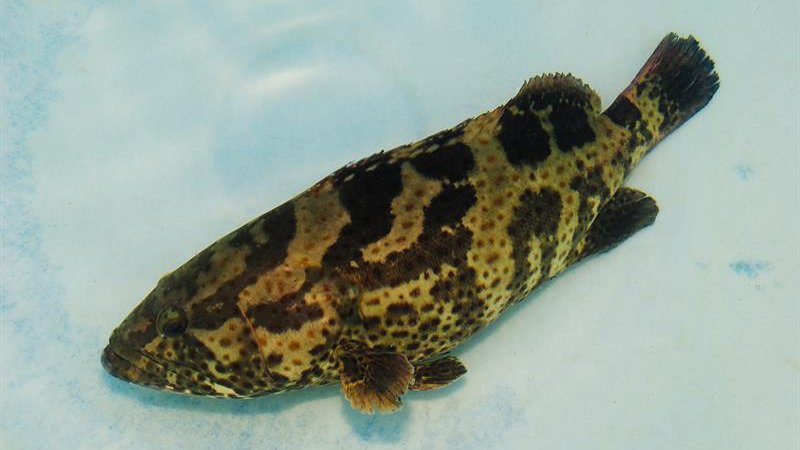
Pearl Grouper (a hybrid cross between Tiger Grouper Epinephelus fuscoguttatus and Giant Grouper Epinephelus lanceolatus) represents one of the highest commercial-value marine species across Asian aquaculture markets. Inheriting elite genetic vigor from both parent lines, Pearl Grouper exhibits rapid growth velocity, high muscle density, excellent flesh quality, and strong resilience against environmental fluctuations compared to purebred grouper species.
However, field production realities confirm that fingerling quality governs over 60% of the entire grow-out cycle's ultimate success. Sourcing uncertified, inbred seed or fingerlings carrying viral nervous necrosis (VER/NNV) or Vibrio spp. bacterial pathogens during early nursery stages frequently triggers 40–50% post-stocking mortality, inflated Feed Conversion Ratios (FCR), and extended harvest timelines.
Addressing these critical industry challenges, VAN TIN GOLDEN CO., LTD.—operating 4 modern nursery facilities spanning 15 hectares of water surface in Van Ninh, Khanh Hoa Province—delivers bio-standard Hybrid Grouper fingerlings nationwide. Producing up to 6,000,000 grouper fingerlings annually, Van Tin Golden guarantees robust, uniform, disease-free seed with superior survival potential for marine cage farmers and enterprise partners.
Corporate Credentials & Supply Infrastructure
- Operating Enterprise: VAN TIN GOLDEN CO., LTD
- Tax Code (MST): 4202050071
- Main Headquarters: 32B To Hien Thanh, Van Ninh Commune, Khanh Hoa Province, Vietnam
- Infrastructure Scale: 4 standardized nursing facilities across 15 hectares of sea surface
- Annual Grouper Fingerling Capacity: 6,000,000 pcs/year
- Technical Hotline & Sales: (+84) 0966 229 962
- Official Channels: vantingolden.com | facebook.com/cagiong.vantin
2. Technical Specifications & Value Assessment Across Fingerling Grading
To assist growers in optimizing capital expenditure and seasonal stocking plans, Van Tin Golden provides standardized grading classifications for Pearl Grouper seed. Depending on farming infrastructure (traditional wooden cages or offshore HDPE circular systems) and site hydrodynamics, Van Tin Golden engineers recommend the optimal seed size.
Fingerling Size Grading & Target Performance Metrics
| Seed Grade Class | Body Length (cm) | Average Weight (g) | Target Survival Rate (%) | Grow-out Duration | Economic Advantages |
|---|---|---|---|---|---|
| Standard Grade 1 | 5 - 7 cm | 8 - 15 g/pc | 80% - 88% | 10 - 12 months | Low initial seed investment, optimized long-distance transport density |
| Medium Grade 2 | 7 - 10 cm | 20 - 40 g/pc | 88% - 94% | 8 - 10 months | Strong immunity, rapid environmental acclimatization |
| Large Grade 3 (Juvenile) | 10 - 14 cm | 50 - 90 g/pc | 95% - 98% | 6 - 8 months | Shortened crop cycle, minimized seasonal storm exposure |
Quality Assessment Standards for Dispatched Seed
- Morphological Integrity: Clear body patterning with characteristic stripe-and-dot markings; intact scales and fins; complete absence of skin lesions or fin erosion.
- Behavioral Vigor: Strong schooling instinct, rapid reaction to auditory and visual stimuli, immediate diving response upon environmental disturbance.
- Biosecurity Verification: 100% of batches undergo random PCR testing prior to release, certifying zero detection of Viral Nervous Necrosis (VER/NNV), Vibrio spp., and ectoparasites.
3. Breakthrough Bio-Standard Nursing Protocols & Zero-Shock Stocking
The key distinction in Van Tin Golden's service lies in its closed-loop bio-nursing technology. Hybrid Grouper fingerlings undergo physical current conditioning, artificial pellet feed training, and strict size-grading before delivery.
Van Tin Golden 4-Step Quality Control Protocol
- Broodstock Genetic Screening: Selection of purebred, non-inbred Epinephelus fuscoguttatus and Epinephelus lanceolatus broodstock lines exhibiting superior growth traits and natural disease resistance.
- Recirculating Bio-RAS Nursing: Specialized nursery tanks using biological filtration systems maintaining steady water parameters (Salinity 28–33‰, pH 7.8–8.4, DO > 5 mg/L).
- Precision Bio-Nutrition: Fry are raised on DHA/EPA-enriched live feeds paired with scheduled fortification of Vitamin C, B-Complex, and gut probiotics.
- Grading & Current Conditioning: Mechanical grading every 5–7 days to eliminate cannibalism, accompanied by counter-current swimming exercise 7 days prior to dispatch.
Zero-Shock Stocking Protocol for Sea Cages
- Environmental Verification: Measure and record salinity, pH, and temperature discrepancies between transport containers and receiving sea cage waters.
- Thermal Equilibrium: Submerge sealed transport bags directly in cage water for 15–20 minutes to equalize internal and external temperatures.
- Osmotic Acclimatization: Open bags and incrementally add sea cage water (20% volume per step) every 5–10 minutes to adjust osmotic pressure.
- Controlled Release: Allow fingerlings to swim out voluntarily during cooler diurnal hours (early morning 5:00–7:00 AM or late afternoon 4:00–6:00 PM).
4. Market Reach: Water Quality Standards & Distribution Network
Van Tin Golden’s Hybrid Grouper fingerling supply network covers major marine aquaculture hubs, including Khanh Hoa, Kien Giang, Phu Quoc, Quang Ninh, and Ba Ria - Vung Tau, while exporting to demanding international markets such as Taiwan, Malaysia, and China.
Water Quality Thresholds for Pearl Grouper Cage Culture
| Environmental Parameter | Optimal Target Range | Warning Threshold | Actionable Technical Solution |
|---|---|---|---|
| Water Temperature | 26°C - 30°C | < 22°C or > 32°C | Lower net cage depth to cooler water layers |
| Sea Salinity | 28‰ - 33‰ | < 20‰ (heavy rains) | Reduce daily feed rations by 30 - 50% to prevent stress |
| Dissolved Oxygen (DO) | > 5.0 mg/L | < 3.5 mg/L | Deploy supplementary aeration or oxygenation units |
| pH Level | 7.8 - 8.4 | < 7.2 or > 8.8 | Suspend agricultural lime bags around cage corners |
| Water Clarity (Secchi) | 1.5 - 3.0 m | < 0.8 m (turbid) | Halt net cleaning to avoid gill irritation |
5. Precision Nutrition Strategies for Optimized Growth
Van Tin Golden’s primary objective is empowering growers to achieve post-stocking survival rates above 90%, shorten commercial grow-out cycles to 8–10 months (harvest weights 1.0 kg–1.5 kg), and optimize FCR to 1.3–1.5.
Feeding Management Across Growth Stages
- Fingerling Stage (5 - 10 cm): High-protein floating pellets (45% - 48% crude protein) fed 3 - 4 times daily at 5% - 7% total body weight.
- Juvenile Stage (10 - 20 cm): Transition to 40% - 42% protein diets fed 2 times daily at 3% - 4% total body weight.
- Grow-Out Stage (> 20 cm): 38% - 40% protein diets fed 1 - 2 times daily at fixed schedules to maintain active feeding response.
- Health Fortification: Coat feed twice weekly with Vitamin C, B-Complex, Beta-glucan, and gut probiotics to reinforce immune defenses.
6. Operations: Biosecurity Protocols & Technical Support Commitments
In commercial cage operations, "Prevention over Cure" remains the foundational operational rule. Van Tin Golden's team of technical engineers provides on-site support throughout stocking, health management, and harvest stages.
Diagnostic Matrix & Treatment Regimens for Common Diseases
| Disease Condition | Clinical Signs & Symptoms | Primary Etiology | Standard Therapeutic Protocol |
|---|---|---|---|
| Parasitic Infestation (Sea Lice, Capsalids) | Fish rub against nets, corneal opacity, lethargic swimming | Benedenia / Cryptocaryon parasites | Freshwater dip for 10-15 minutes or controlled Formalin bath |
| Bacterial Dermal Ulceration | Red lesions, scale loss, severe anorexia | Vibrio alginolyticus bacteria | Incorporate vet-approved oral antibiotics into feed for 5-7 days |
| White Gill & White Liver Disease | Pale gills, pale liver, surface swimming | Hypoxia, feed toxicity | Boost aeration; fortify feed with herbal hepatoprotectants |
Routine Cage Sanitation Protocol
- Wash and exchange cage nets every 2 to 4 weeks to preserve water circulation and remove biofouling.
- Routinely observe feed response and immediately remove moribund or dead fish to break horizontal infection cycles.
- Suspend disinfectant lime bags at cage corners to neutralize floating pathogens in current flow.
- Van Tin Golden provides full technical partnership and facilitates buy-back connections for bulk commercial fish with major processing plants and seafood distributors.
Partnering with VAN TIN GOLDEN CO., LTD. for premium Hybrid Grouper fingerlings delivers the foundation for sustainable, high-yield marine aquaculture operations. For technical inquiries or fingerling orders, contact Van Tin Golden directly via Hotline/Zalo: (+84) 0966 229 962 or visit vantingolden.com.