




Bio-Standard Cobia Fingerling Supply Services – Van Tin Golden
Industrial-grade Cobia (Rachycentron canadum) fingerling production and supply by Van Tin Golden. Advanced biosecurity nursery protocols, PCR health screening, superior growth rates, and full technical support for commercial marine cage farming.
Index
1. Biological Superiority & Commercial Horizons of Cobia Seed
Enterprise Infrastructure & Supply Capacity
2. Standardized Fingerling Specifications & Value Analysis
Cobia Fingerling Grading & Performance Benchmarks
Quality Control & Biosecurity Assurance Criteria
3. Closed-Loop Bio-Nursery Technology & Zero-Stress Transport Protocols
Van Tin Golden 4-Stage Nursery Protocol
Acclimatization & Zero-Shock Stocking Guide
4. Hydrodynamic Parameters & Environmental Operating Thresholds
Optimal Water Parameters for Cobia Marine Cages
5. Precision Feeding Strategies & FCR Optimization
Stage-Specific Feeding Regimen
6. Biosecurity Operations & Comprehensive Technical Services
1. Biological Superiority & Commercial Horizons of Cobia Seed
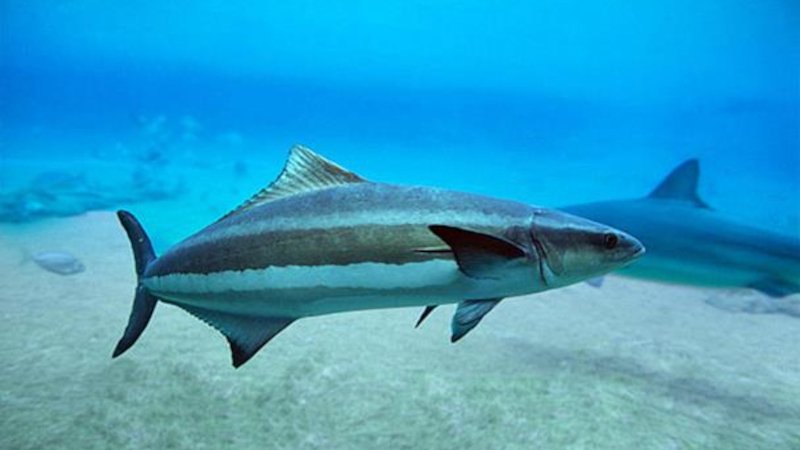
Cobia (Rachycentron canadum), known locally in Vietnam as "Cá Bóp", stands as one of the most lucrative pelagic marine species in commercial open-water and coastal cage aquaculture across Southeast Asia. Renowned for its exceptional specific growth rate (SGR), firm muscular texture, high omega-3 fatty acid concentration, and high fillet yield, Cobia can reach market weight (5.0–8.0 kg) within 10 to 12 months of grow-out under optimal conditions.
Despite high profitability, commercial Cobia farming presents distinct technical bottlenecks. Cobia juveniles exhibit high metabolic rates, severe sensitivity to handling stress, and vulnerability to viral encephalopathy and retinopathy (VER/NNV), Photobacterium damselae, and marine ectoparasites like Amyloodinium ocellatum. Stocking uncertified fingerlings sourced from wild capture or biosecurity-compromised nurseries leads to mass mortality events exceeding 60%, feed conversion ratio (FCR) spikes above 1.8, and severe batch heterogeneity.
VAN TIN GOLDEN CO., LTD.—operating 4 state-of-the-art nursery facilities encompassing 15 hectares of pristine marine surface in Van Ninh, Khanh Hoa Province—provides certified, bio-standard Cobia fingerlings. Producing millions of robust, pathogen-free marine fingerlings annually, Van Tin Golden delivers standardized Cobia seed engineered for maximum survival and optimal economic yields in industrial marine sea cages.
Enterprise Infrastructure & Supply Capacity
- Legal Entity: VAN TIN GOLDEN CO., LTD
- Tax Code (MST): 4202050071
- Operational Base: 32B To Hien Thanh, Van Ninh Commune, Khanh Hoa Province, Vietnam
- Infrastructure Scale: 4 modern nursery units covering 15 hectares of sheltered sea water surface
- Production Capacity: Up to 5,000,000 high-grade marine fingerlings per year
- Direct Sales & Technical Hotline: (+84) 0966 229 962
- Digital Portals: vantingolden.com | facebook.com/cagiong.vantin
2. Standardized Fingerling Specifications & Value Analysis
To optimize stocking density and capital deployment, Van Tin Golden offers standardized grading metrics for Cobia fingerlings. Fingerlings undergo automated and manual sorting to ensure uniform size, preventing cannibalism and feed competition during early grow-out.
Cobia Fingerling Grading & Performance Benchmarks
| Seed Grade Class | Body Length (cm) | Average Weight (g) | Target Survival Rate (%) | Target Grow-Out Duration | Key Commercial Advantages |
|---|---|---|---|---|---|
| Standard Grade 1 | 8 - 12 cm | 15 - 30 g/pc | 82% - 88% | 11 - 12 months | Lower initial seed acquisition cost, higher transport density per unit |
| Medium Grade 2 | 12 - 16 cm | 35 - 75 g/pc | 88% - 93% | 9 - 11 months | High environmental adaptability, reduced nursery mortality risk |
| Large Grade 3 (Juvenile) | 16 - 22 cm | 80 - 160 g/pc | 94% - 98% | 7 - 9 months | Minimized crop risk, rapid transition to high-protein commercial feeds |
Quality Control & Biosecurity Assurance Criteria
- Morphological Precision: Fusiform body streamline, well-developed fins, clear longitudinal body stripes, zero cranial deformities, and complete lack of epithelial sloughing.
- Physiological Vigor: Strong counter-current swimming behavior, active schooling response, and aggressive surface-feeding motivation.
- Molecular Pathogen Testing: Every batch undergoes PCR testing to certify zero presence of Viral Nervous Necrosis (NNV/VER), Photobacterium damselae, Vibrio spp., and ciliated protozoans.
3. Closed-Loop Bio-Nursery Technology & Zero-Stress Transport Protocols
Van Tin Golden’s competitive edge relies on proprietary bio-nursery engineering. Cobia larvae are reared under strict biosecure, recirculating aquaculture system (RAS) conditions and transitioned seamlessly to marine net-pen conditioning.
Van Tin Golden 4-Stage Nursery Protocol
- Genetically Screened Broodstock: Selection of wild-conditioned, high-performing broodstock pairs tested negative for vertical pathogen transmission.
- RAS Water Treatment & Ozonation: Seawater is passed through mechanical sand filtration, micro-screening, UV sterilization, and controlled ozonation to eliminate waterborne pathogens.
- Bio-Fortified Micro-Diets: Fry are fed rotifers and Artemia enriched with high-DHA microalgae, followed by step-wise transition to premium high-protein micro-extruded pellets.
- Flow-Current Conditioning: Prior to delivery, juveniles undergo high-flow swimming trials in sea pens to build muscular strength and cardiovascular stamina.
Acclimatization & Zero-Shock Stocking Guide
- Thermal Equalization: Float transport oxygenation bags in target cage water for 20 minutes to equalize temperature differences to within < 1°C.
- Salinity & pH Alignment: Slowly introduce cage water into transport containers over 20–30 minutes to adjust osmotic pressure gradually.
- Probiotic & Anti-Stress Bath: Treat fingerlings with a 5-minute anti-stress dip containing Vitamin C (20 ppm) and electrolyte supplements during release.
- Timing Strategy: Stock exclusively during low-solar irradiance hours (5:00–7:00 AM or after 5:00 PM) to avoid thermal stress and bird predation.
4. Hydrodynamic Parameters & Environmental Operating Thresholds
Cobia exhibit high oxygen consumption and rapid metabolism. Maintaining optimal water quality in open-sea or coastal cage installations is critical to maintaining feed intake and immune function.
Optimal Water Parameters for Cobia Marine Cages
| Water Parameter | Optimal Operating Range | Critical Warning Threshold | Corrective Operational Action |
|---|---|---|---|
| Water Temperature | 27°C - 31°C | < 22°C or > 33°C | Lower net depth or adjust feeding frequency to cooler periods |
| Salinity | 28‰ - 34‰ | < 18‰ (monsoon runoff) | Reduce daily feeding rate by 30 - 50% to reduce metabolic load |
| Dissolved Oxygen (DO) | > 5.5 mg/L | < 4.0 mg/L | Install supplemental submerged aeration or water-mixing equipment |
| pH Level | 7.8 - 8.4 | < 7.3 or > 8.8 | Apply agricultural lime bags around net frame perimeters |
| Water Current Speed | 0.2 - 0.5 m/s | < 0.1 m/s or > 1.0 m/s | Select open-water sites with steady tidal flushing |
5. Precision Feeding Strategies & FCR Optimization
Achieving high profit margins in commercial Cobia farming requires maintaining Feed Conversion Ratios (FCR) between 1.3 and 1.6 using high-energy extruded floating feeds.
Stage-Specific Feeding Regimen
- Nursery Stage (15 - 50 g): Feed 45% - 48% crude protein, 12% - 15% crude lipid floating feed 4 times daily at 5% - 7% body weight.
- Growth Stage (50 - 500 g): Feed 43% - 45% crude protein, 10% - 12% lipid feed 2 - 3 times daily at 3% - 4% body weight.
- Final Grow-Out Stage (> 500 g): Feed 40% - 42% crude protein feed 1 - 2 times daily at 1.5% - 2.5% body weight until harvest.
- Functional Supplementation: Mix Vitamin C (3-5 g/kg feed), beta-glucans, and organic trace minerals into feeds 2 days per week to reinforce systemic immunity.
6. Biosecurity Operations & Comprehensive Technical Services
Disease control in pelagic cage farming relies on early detection, strict net sanitation, and continuous surveillance. Van Tin Golden offers end-to-end technical support throughout the production cycle.
Common Pathogen Diagnostics & Treatment Protocols
| Disease Condition | Key Clinical Symptoms | Causative Agent | Standard Management Protocol |
|---|---|---|---|
| Amyloodiniosis (Velvet Disease) | Gasping at surface, heavy gill mucus, dark body coloration | Amyloodinium ocellatum (dinoflagellate) | Freshwater bath for 5-10 minutes or hydrogen peroxide immersion under technical supervision |
| Photobacteriosis (Pseudotuberculosis) | White nodules on spleen and kidney, lethargy, anorexia | Photobacterium damselae subsp. piscicida | Incorporate approved oral antibacterial therapy via feed for 7 days |
| Vibrio Septicemia | Hemorrhagic ulcerations on skin, exophthalmia, fin rot | Vibrio alginolyticus / parahaemolyticus | Improve water exchange, reduce feeding, apply targeted vet-approved antibiotics |
Routine Cage Management & Buy-Back Support
- Change and clean cage nets every 3 to 4 weeks to remove biofouling, tunicates, and algae, ensuring free oxygen flow.
- Remove lethargic or morbid individuals immediately upon morning inspection to prevent horizontal disease transmission.
- Van Tin Golden provides complete technical consultation, environmental monitoring guidance, and direct buy-back networking for large-scale commercial Cobia harvests destined for processing factories and export markets.
Investing in certified Cobia fingerlings from VAN TIN GOLDEN CO., LTD. provides the structural foundation for profitable, large-scale marine aquaculture. For technical consultations or fingerling orders, contact our engineering team via Hotline/Zalo: (+84) 0966 229 962 or visit vantingolden.com.